
Political parties play a central role in modern democracies. They bring people together around shared ideas, values, priorities, and policy goals, helping citizens participate in the political process. While individual candidates are important, political parties provide the organization needed to contest elections, develop policies, communicate with voters, and form governments. A healthy democracy depends on citizens having meaningful choices, and political parties help create those choices.
Representing Different Interests
One of the most important roles of political parties is representing different sections of society. People have different opinions about taxation, education, healthcare, employment, infrastructure, national security, and other public issues. Political parties organize these different viewpoints into broader platforms.
By representing particular priorities and concerns, parties allow citizens to support policies that reflect their values. This representation also encourages political debate and allows different groups to have a voice in government.
Providing Choices During Elections
Elections are a fundamental part of democracy, but voters need meaningful alternatives when making decisions. Political parties usually present candidates and manifestos outlining their goals and proposed policies.
These platforms allow voters to compare different approaches to national and local issues. Parties therefore help simplify complex political questions by organizing policies into recognizable programs that citizens can evaluate before voting.
Recruiting Political Leaders
Political parties also help identify and develop political leaders. They may provide opportunities for individuals to become involved in local organizations, community campaigns, legislative work, and elections.
Through this process, people with different professional and community backgrounds can enter politics. Parties can provide training, organizational support, and experience that help candidates understand public administration and political responsibilities.
Developing Policies
Political parties are important sources of policy development. They research public concerns, consult supporters, debate possible solutions, and develop programs that can be presented to voters.
When a party wins an election, its policies may become the foundation for government decisions. Opposition parties also contribute by examining government proposals, challenging decisions, and offering alternative approaches.
Encouraging Political Participation
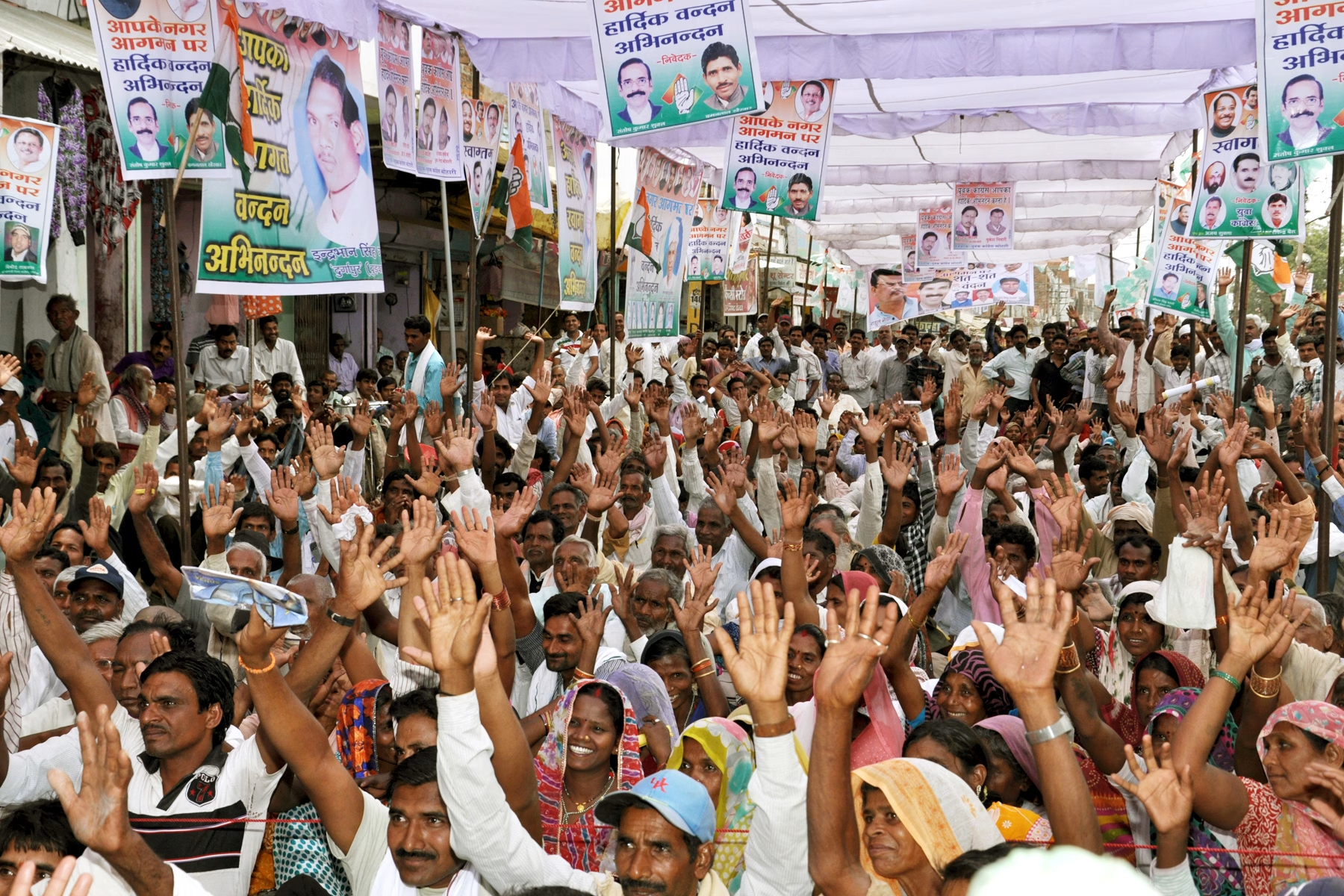
Democracy works best when citizens participate. Political parties encourage participation through campaigns, public meetings, discussions, volunteering, fundraising, membership activities, and voter outreach.
They can also help people understand political issues and encourage citizens to take part in elections. Participation does not necessarily mean joining a party; citizens can participate by attending discussions, evaluating policies, voting, or communicating their concerns to representatives.
Forming and Running Governments
In many democratic systems, political parties are directly involved in forming governments. A party or coalition that receives sufficient electoral support may form the government and select ministers or other officials.
Party organization can make it easier to coordinate legislative priorities and implement policies. In parliamentary democracies, parties are particularly important because the stability of government can depend on support within the legislature.
Holding Governments Accountable
Political parties are not only important when they are in power. Opposition parties have an essential democratic function because they scrutinize government decisions.
They can question policies, raise concerns in legislative bodies, examine proposed laws, and present alternative solutions. Effective opposition can help prevent excessive concentration of power and encourage greater transparency.
Connecting Citizens With Government
Political parties can act as a bridge between citizens and government institutions. Local party representatives may hear community concerns and communicate them to elected officials.
This connection can help governments understand issues affecting ordinary people. At the same time, parties can explain government policies to citizens and encourage public discussion.
Supporting Democratic Debate
Political disagreement is normal in a democracy. Political parties provide organized platforms through which different ideas can compete peacefully.
Constructive debate allows citizens to hear multiple perspectives and evaluate competing arguments. However, democratic parties also have a responsibility to respect constitutional principles, lawful political participation, and the rights of people who hold different views.
Challenges Political Parties May Face
Political parties can strengthen democracy, but they can also create challenges. Excessive partisanship, misinformation, corruption, lack of internal democracy, or prioritizing political interests over public welfare can weaken public trust.
For this reason, transparency, accountability, responsible communication, and respect for democratic institutions are important qualities in political organizations.
Conclusion
Political parties are essential components of many modern democracies. They represent public interests, provide electoral choices, develop policies, recruit leaders, encourage participation, form governments, and hold those governments accountable. Their effectiveness ultimately depends on how responsibly they perform these functions. When political parties encourage informed participation, peaceful competition, transparency, and meaningful representation, they can contribute significantly to a stronger and more responsive democracy.